Penn State Separator series · Effective fiber
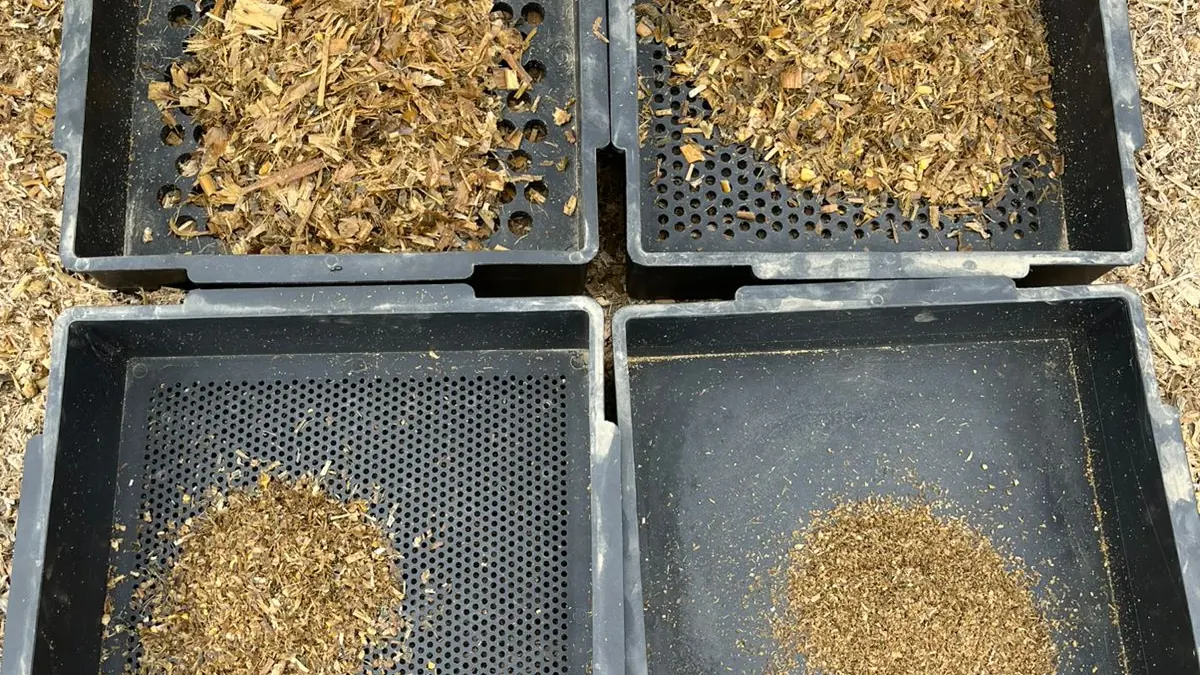
Physically effective fiber (peNDF) is the portion of NDF with enough length and structure to make the cow chew, ruminate, build the rumen mat and produce saliva. The math is simple: peNDF = NDF × physical effectiveness factor (pef). That is why two rations with the same NDF can differ in effectiveness, and the Penn State Particle Separator is the practical way to see that difference in the TMR, right on your own dairy.
Content source: this article was built from answers given by the Ruminants.ai app on physically effective fiber, based on the references listed at the end. It is part of the Penn State Separator series, which starts with the reference ranges your TMR should follow.
What peNDF is, in one equation
NDF tells you how much fiber the ration contains. The physical effectiveness factor tells you how much of that fiber has the shape and size to stimulate chewing. Multiply the two and you get peNDF.
The same NDF can deliver different effectiveness when particle size, fiber fragility, moisture or forage processing change (Piran Filho, 2022). That is exactly where a lab analysis falls short on its own: it measures composition, not the physical structure of what reaches the bunk.
Why cows need effective fiber
With adequate peNDF, cows chew more and produce more saliva, which buffers the rumen. This supports rumen motility and helps maintain an environment suited to fiber digestion (Nutrient Requirements of Dairy Cattle, 8th revised ed. — Santafé edition; Yang & Beauchemin, 2006b).
Too little or too much: both sides of the problem
- Too little peNDF can lower rumen pH, fiber digestion and milk fat, and raise the risk of subacute ruminal acidosis and erratic intake (Yang & Beauchemin, 2006b).
- Too much peNDF: overly long particles can increase rumen fill, limit dry matter intake and encourage TMR sorting.
Keep in mind: the goal is to work within an adequate peNDF range, not to maximize it (Nutrient Requirements of Dairy Cattle, 8th revised ed. — Santafé edition).
Effective fiber and milk yield
Raising peNDF can improve rumen function and fiber use, but it does not guarantee more milk. The response depends on concentrate level, ration fermentability, stage of lactation and fiber digestibility (Yang & Beauchemin, 2007; Zebeli et al., 2012). In the review by Zebeli et al. (2012), most of the literature shows that forage particle size does not change milk yield.
Where effective fiber shows up most clearly is milk fat. In Yang & Beauchemin (2006a), a peNDF of 10% of DM, measured with the 8 and 19 mm sieves of the Penn State separator, was enough to sustain 3.5% milk fat in mid- and late-lactation cows fed a barley-based ration.
How to use the separator to assess effective fiber
Evaluate the whole TMR, not just the forage. Compare the result with the TMR reference ranges (Grant, 2026):
| Sieve | TMR range |
|---|---|
| 19 mm | 2–5% |
| 8 mm | >50% |
| 4 mm | 10–20% |
| Pan | 25–30% |
Already weighed the fractions? Use the free calculator in the series’ main article to convert the weights into percentages and compare them with the ranges.
Alongside the separator, watch the cows: intake, sorting, rumination, milk fat and manure consistency. If the TMR changes along the bunk, the problem may be the mix; see how to check your TMR mixer wagon.
One important point: there is still no universally validated method for a single peNDF requirement. Interpret the result together with forage NDF, starch, digestibility and intake (Nutrient Requirements of Dairy Cattle, 8th revised ed. — Santafé edition). In the Dairy Cow Management and Nutrition course, Dr. Mike Hutjens also works with two targets tied to indigestible fiber: peuNDF240 of 1.6 kg/cow/day and uNDF240 of 0.4% of body weight.
Bring the Penn State separator to your dairy
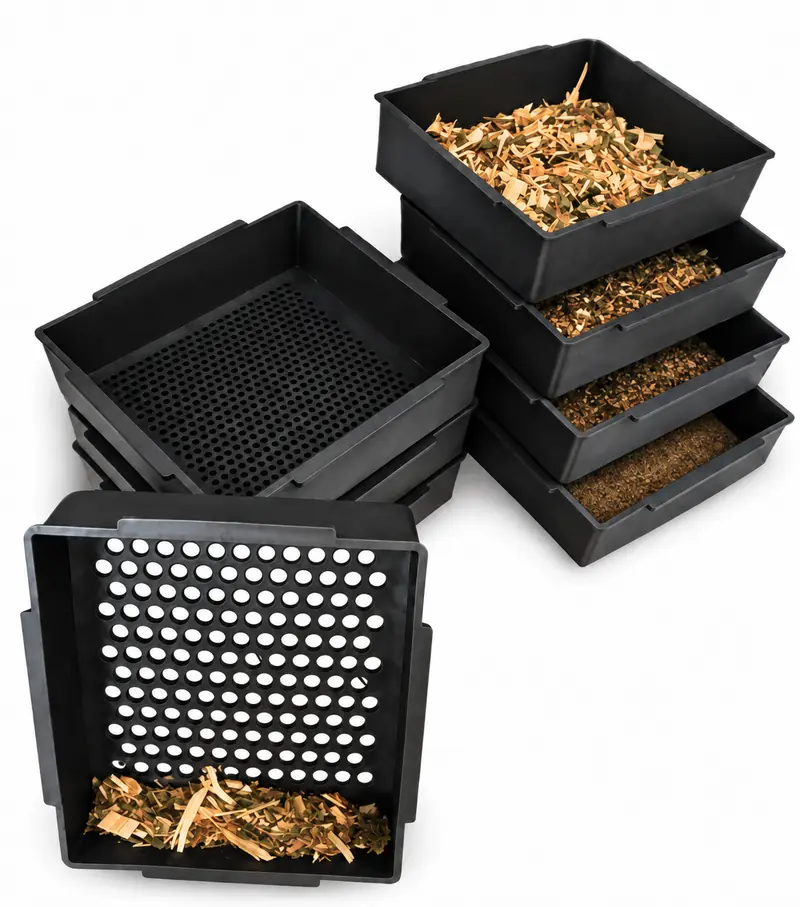
Penn State Particle Separator
3 sieves (19 / 8 / 4 mm) + closed pan · fiber-reinforced polypropylene
Get my sieve setYour separator measures. The AI interprets.
This content grew out of questions asked to Ruminants.ai. Create your account, enter the weights of the four fractions and get the percentages, the comparison with the ranges and a nutritional reading that tells you where to look before you change the ration.
Create your Ruminants.AI accountFrequently asked questions
Are NDF and peNDF the same thing?
No. peNDF is NDF multiplied by the physical effectiveness factor. Two rations with the same NDF can have different peNDF.
Is more effective fiber always better?
No. Too many long particles can limit intake and make sorting easier. The goal is to stay within an adequate range.
Does the separator replace a lab analysis?
No. The separator measures the physical distribution of particles; interpreting it requires NDF, starch, digestibility and the cow’s response.
Keep reading the series: TMR sorting and TMR mixer wagon.
References
- Grant (2026). Penn State Particle Separator reference ranges for TMR (% as-fed). Presented in Dr. Mike Hutjens’ class.
- Heering, R. et al. 2024. The Journal of Agricultural Science. DOI: 10.1017/S0021859623000539
- Hutjens, M. Dairy Cow Management and Nutrition course. Santafé Agroinstituto.
- Piran Filho, F. A. 2022. Efetividade física de frações da silagem de milho estratificadas com o Separador de Partículas da Penn State para vacas em lactação. PhD thesis, UEM (Brazil).
- Nutrient Requirements of Dairy Cattle, 8th revised ed. — Santafé edition.
- Yang; Beauchemin 2006a. Journal of Dairy Science. DOI: 10.3168/jds.S0022-0302(06)72345-1
- Yang; Beauchemin 2006b. Journal of Dairy Science. DOI: 10.3168/jds.S0022-0302(06)72086-0
- Yang; Beauchemin 2007. Journal of Dairy Science. DOI: 10.3168/jds.2006-818
- Zebeli et al. 2012. Journal of Dairy Science. DOI: 10.3168/jds.2011-4421